Northern Ontario leaders push for 2+1 highway model to improve safety, unlock economic potential, and boost national trade infrastructure
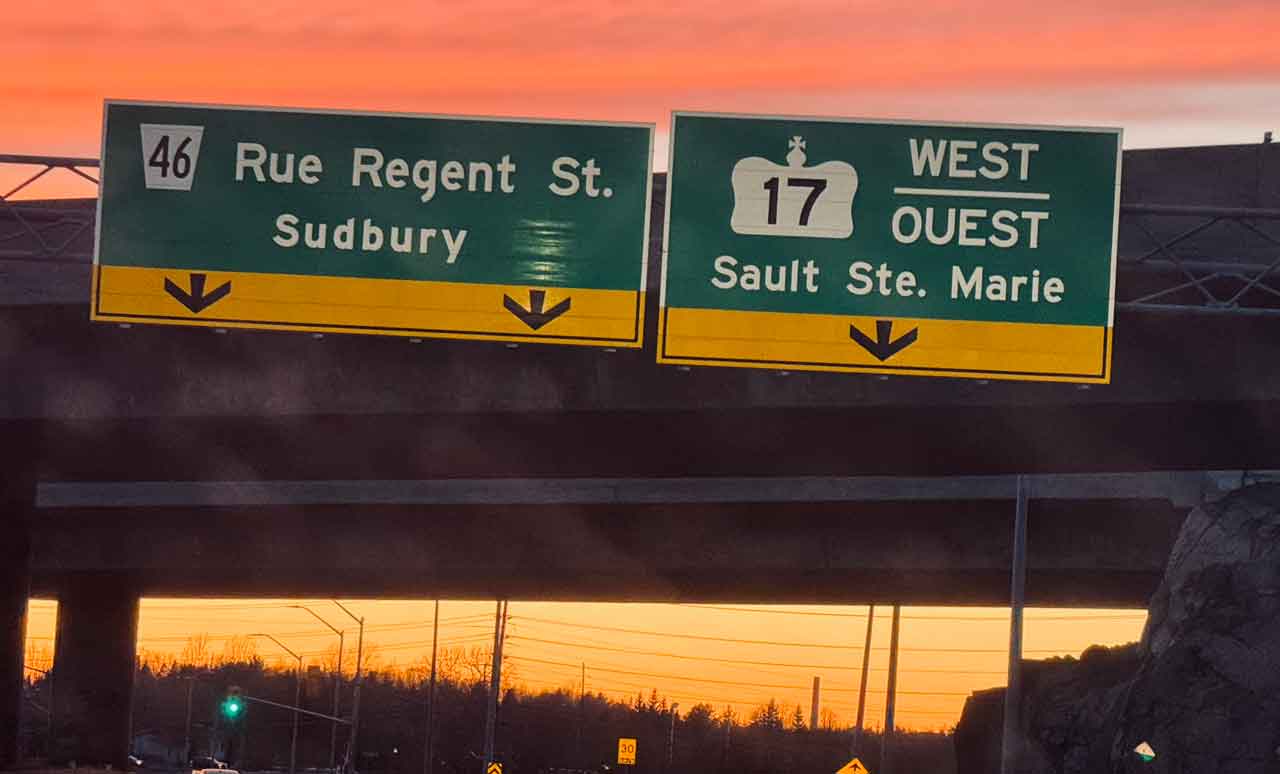
THUNDER BAY – POLITICS – The Federation of Northern Ontario Municipalities (FONOM) is calling on the federal and provincial governments to formally designate the reconstruction of Highways 11 and 17 as a nation-building infrastructure priority under the Building Canada Act.
In a detailed proposal submitted to Prime Minister Mark Carney and Premier Doug Ford, FONOM urges the transformation of these key Trans-Canada Highway routes into modern 2+1 corridors—three-lane highways with alternating passing lanes and median barriers, a design proven to significantly reduce collisions and improve traffic flow.
A Made-in-Ontario Solution to a National Challenge
The proposal outlines a two-phase plan that starts with reconstruction from North Bay to Cochrane on Highway 11, and from Renfrew to Sudbury on Highway 17. The second phase would see the 2+1 model extended from Cochrane to Nipigon, as well as along Highway 11/17 from Thunder Bay to Kenora, and Sault Ste. Marie to Sudbury.
“This isn’t just about Northern Ontario,” said FONOM President Danny Whalen. “This is a national opportunity to build smarter, safer, and more resilient transportation routes. Highways 11 and 17 are critical links in Canada’s supply chain, connecting east to west and supporting industries across the country.”
Thunder Bay’s Stake in the Push
For Thunder Bay, the proposal has direct implications. With the city serving as a key logistics hub between Manitoba and Southern Ontario, improved highway infrastructure would bolster freight movement through the region, reduce delays caused by weather closures on Highway 17, and increase reliability for both commercial and emergency transport.
It would also support growing sectors like mining and forestry in Northwestern Ontario by ensuring safer and more efficient transportation of goods, equipment, and workforce—particularly as development in the Ring of Fire and other critical mineral sites intensifies.
A Safer, More Cost-Effective Model
Unlike full highway twinning, the 2+1 design has been adopted in countries like Sweden, Finland, and Australia for its safety and affordability. It features a third centre lane that alternates direction every few kilometres and includes a crash-rated median barrier, reducing fatal collisions by up to 76% in international models.
Ontario’s Ministry of Transportation is already moving forward with pilot projects for the 2+1 model, including a stretch between North Bay and Temagami, scheduled for 2026.
“A Trans-Canada Highway Worthy of the Name”
FONOM’s submission aligns its proposal with Prime Minister Carney’s five nation-building priorities outlined in the Building Canada Act: strengthening national autonomy, supporting economic growth, ensuring Indigenous inclusion, contributing to climate goals, and prioritizing successful project delivery.
“With 925,000 truck shipments moving between Western Canada and Ontario through two-lane highways each year, and traffic volumes between Cochrane and Nipigon rising, the time for strategic investment is now,” stated FONOM.
The group argues that Highway 11, in particular, offers superior fuel efficiency and year-round reliability compared to the often-weather-impacted Highway 17 along Lake Superior’s north shore—further justifying the expansion.
The Road Ahead
The Trans-Canada Highway, the longest continuous national route in the world, has long served as a symbol of national unity. Its future, says FONOM, depends on thoughtful reinvestment—particularly in Northern Ontario, where infrastructure gaps persist.
“Upgrading Highways 11 and 17 is more than a transportation fix,” said Whalen. “It’s a statement that Northern Ontario matters, and that we’re full partners in building a more connected, resilient, and prosperous Canada.”
As the federal government continues consultations under the Building Canada Act, FONOM is calling on Ottawa and Queen’s Park to seize this moment—a once-in-a-generation chance to make the Trans-Canada Highway truly coast-to-coast in both form and function.