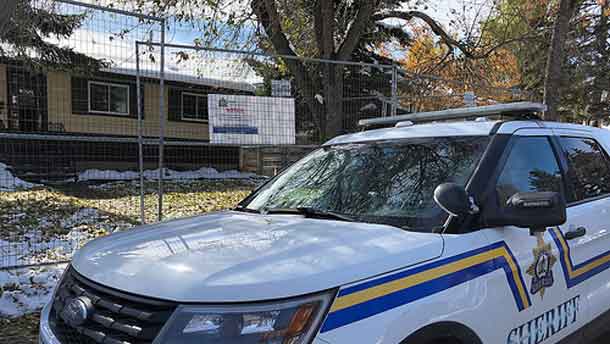
THUNDER BAY – NATIONAL NEWS — When the Alberta Sheriffs’ Safer Communities and Neighbourhoods (SCAN) unit shut down a Calgary drug house on August 25, it marked another example of how Alberta uses unique legal tools to deal with problem properties tied to crime.
The property, located at 4520 19 Avenue NW, was the subject of more than 31 police calls since September 2024 and months of public complaints about drug trafficking, stolen property, and suspicious activity. Under a court order, the residence is now boarded up and fenced off for 88 days, with all occupants—including the property owner—barred from returning until November 21. The order’s conditions remain in place until 2027.
This aggressive approach to property-linked crime has sparked discussion on whether a similar model could strengthen community safety efforts in Ontario, where municipalities like Thunder Bay regularly confront drug houses, trafficking hubs, and problem rentals.
How Alberta’s Sheriffs Work
The Alberta Sheriffs Branch, established in 2006, was created to support police and expand provincial law enforcement capacity. Today, the Sheriffs handle everything from traffic safety and fugitive apprehension to court security and organized crime investigations.
One of their most high-profile programs is SCAN, introduced in 2008. SCAN targets properties used for:
-
Drug trafficking
-
Gang activity
-
Prostitution or human trafficking
-
Illegal alcohol sales
-
Organized crime operations
When a complaint is made, Sheriffs investigate. If evidence supports it, they can pursue court orders that restrict access, impose conditions, or even shut down a property temporarily.
Since its inception, SCAN has investigated more than 10,000 properties and issued 135 community safety orders province-wide.
“Let this be a message to all drug dealers: you are not welcome in this province,” said Mike Ellis, Alberta’s Minister of Public Safety and Emergency Services, following the Calgary closure.
Ontario’s Approach: Police-Led, Community-Driven
In Ontario, there is no direct equivalent to SCAN. Instead, enforcement against drug houses or criminal properties falls to municipal police services, the OPP, and municipal bylaw officers.
Tools available in Ontario include:
-
Criminal Code investigations for drug trafficking and organized crime.
-
Property Standards and Fire Code enforcement through city bylaw departments.
-
Landlord and Tenant Board interventions when problem tenants are involved.
-
Nuisance and noise bylaws to address community complaints.
In cities like Thunder Bay, police often rely heavily on public tips to investigate suspected drug houses. However, the lack of a civil enforcement tool like SCAN can make it more difficult to take rapid action against properties that repeatedly attract criminal activity but don’t always yield immediate criminal charges.
Would SCAN Work in Ontario?
The Calgary closure raises the question: should Ontario explore a SCAN-style model that empowers authorities to hold property owners accountable and shut down sites of persistent criminal activity?
Supporters argue such a system could:
-
Relieve pressure on police by using civil law alongside criminal charges.
-
Increase accountability for landlords and property owners.
-
Provide faster relief to communities plagued by drug houses and trafficking hubs.
Critics, however, caution that SCAN-style powers must balance civil liberties and property rights with community safety.
For Northern Ontario cities like Thunder Bay—where residents often voice frustration about the visible impact of drug trafficking in residential neighbourhoods—SCAN’s track record in Alberta may fuel discussions about whether Ontario should consider a similar tool.