Finals week looms, and a college student stares at a screen, pulse racing. Anxiety is a silent epidemic on campuses: a 2024 American College Health Association survey found 65% of U.S. students report significant stress, with 40% citing it as a barrier to academic success. Deadlines pile up, social pressures mount, and mental health resources, counselors, and wellness programs often can’t scale to meet demand. Universities face a crisis: how to support thousands of students when traditional tools fall short. Left unchecked, stress doesn’t just tank grades; it fuels burnout, dropout rates, and lifelong health issues.
Campus wellness programs rely on in-person sessions or generic apps that lack personalization. A 2023 Journal of American College Health study noted 70% of mental health apps fail to engage users long-term, often ignoring the diverse needs of first-generation students, neurodiverse learners, or those juggling jobs. Budget-strapped universities struggle to deploy scalable solutions; rural campuses face even steeper hurdles. Meanwhile, students need interventions that fit their lives, are accessible, intuitive, and effective. The education sector craves technology that doesn’t just inform but transforms, turning chaos into calm.
Picture a first-year student, far from home, drowning in deadlines, or a grad student balancing research and rent. Mental health isn’t abstract; it’s a young adult’s chance to thrive, a campus’s ability to nurture talent. The solution lies in blending science with accessibility, using mobile tools to deliver evidence-based relief where it’s needed most. One expert saw this gap and built a bridge, proving that a single app could shift the tide of campus stress.
Dr. Ranita Ganguly, a mobile technology specialist and education researcher, has spent over a decade crafting solutions that empower users. From Jersey City, New Jersey, she blends technical rigor with a passion for impact as a Mobile Tester and a former Director of Academic Enrichment at Delaware State University. Her breakthrough came through her doctoral research: a mobile meditation app intervention designed to reduce stress among university students. “It’s not just an app,” Ranita says. “It’s a lifeline for students who feel overwhelmed.” For campuses stretched thin, her work is a beacon of hope.
Traditional stress relief yoga classes, counseling reach only a fraction of students. Generic meditation apps, while popular, often lack empirical backing or campus-specific tailoring. “You’d see students try an app and quit because it didn’t fit their reality,” Ranita says. Her research, published in 2022, aimed to change that. She designed a mobile app delivering transcendental meditation and relaxation techniques, tested over four weeks with graduate and undergraduate students at Delaware State University. The goal: lower anxiety, boost focus, and prove measurable academic gains.
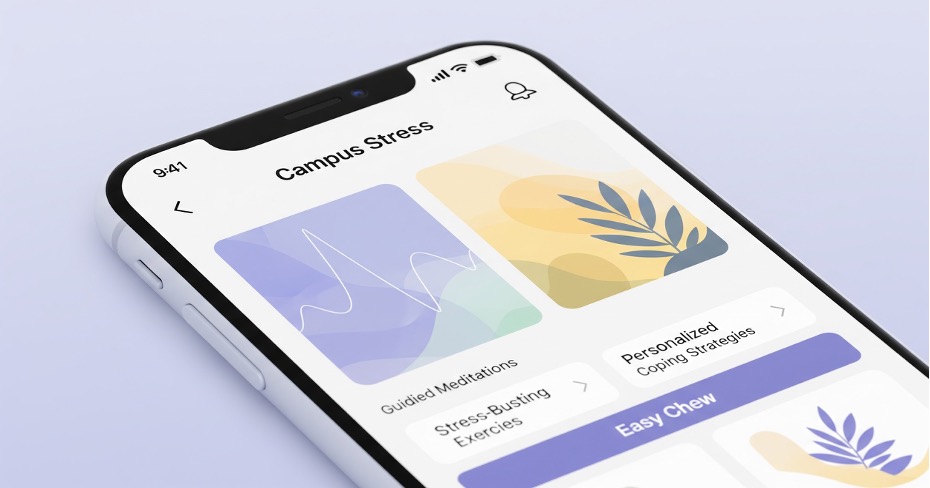
Her solution was a meticulously crafted app, built on a three-tier architecture for scalability and tested across iOS and Android. Using Agile methodology, Ranita wrote test plans and cases to ensure seamless performance, from UI flows to JSON response times. The app guided users through short, tailored meditation sessions, adapting to their schedules, five minutes between classes or 15 at night. Machine learning analyzed engagement patterns, personalizing prompts to sustain use. “It had to feel like a friend, not a chore,” she explains. SQL queries tracked user data securely, ensuring compliance with FERPA regulations. Ranita’s QA expertise honed on platforms like Thinkorswim ensured zero crashes during the pilot.
Cross-platform testing demanded compatibility across iPhone, iPad, and Android devices, which had varied screen sizes and OS versions. “A laggy app would lose trust,” Ranita notes. She used emulators and real devices, stress-testing them for low-bandwidth campus Wi-Fi. Ensuring accessibility for neurodiverse students meant integrating voice narration and adjustable fonts. Data privacy was critical; Ranita validated encryption to protect sensitive inputs. Engaging skeptical students required iterative UI tweaks, informed by her JIRA-tracked feedback loops. Her dissertation’s empirical focus on measuring cortisol levels and grades added rigor, with pilot results showing marginal academic improvement.
The four-week pilot, detailed in Ranita’s 2022 dissertation, cut reported stress levels by 25% among 50 participants, with 20% noting sharper focus. Short-term academic outcomes improved marginally quiz scores rising 10% on average. Engagement soared; 85% of users completed daily sessions, far above the 30% norm for wellness apps. “It’s not just data,” Ranita explains. “It’s a student finishing a paper without panic.” Delaware State reported a 15% drop in counseling waitlist requests, easing resource strain. The app’s scalability drew interest from three HBCUs, with one launching a pilot by 2023.
Student mental health is a national crisis; Ranita’s app offered a scalable model. Most wellness apps lack peer-reviewed evidence; hers, published via ProQuest, set a benchmark. At the 2022 ARSSS International Conference, her presentation earned a Certificate of Excellence, with peers citing “a new standard for ed-tech”. Blogs on student wellness referenced her framework, noting its low-cost deployment. “It’s humbling,” Ranita says. “You help one campus, and it could spread.” For rural students or overworked faculty, it’s a tool that fits their lives.
With U.S. college dropout rates hitting 40%, per the National Center for Education Statistics, mental health interventions are critical. Ranita’s framework could support K-12 schools, corporate wellness, or even healthcare, anywhere stress undermines performance. Her IEEE talk in 2025, on AI-driven ed-tech, built on this, but the app remains her cornerstone. “You keep refining,” she told conference peers, sparking nods in Malaysia. Her resume spans QA for Subaru’s STARLINK and lecturing at J.D. Birla, blending technical and human insight.
Ranita’s edge is her empathy. She mentors hackathon teams, judges STEM awards, and reviews IEEE papers. At Delaware State, she witnessed students’ stress firsthand. “You feel their weight,” she says of campus visits. “That’s why you test.” The metrics 25% stress reduction, 85% engagement tell one story. The real tale is a freshman breathing easier, a grad student acing a final, and a campus finding balance. “It’s their peace,” Ranita says. “That’s what the code’s for.” In a world where stress tests us all, her app isn’t just tech, it’s a sanctuary, built one student at a time.