KENORA — The Ontario government is renewing and expanding its fight against human trafficking with a record $345 million investment into its Anti-Human Trafficking Strategy (AHTS) — the largest commitment of its kind in Canada.
As part of this investment, the province officially launched a new Children At Risk of Exploitation (CARE) Unit in Kenora on July 30, 2025, to better protect children and youth in the region from sex trafficking and support survivors.
Marking the World Day Against Trafficking in Persons, Michael Parsa, Minister of Children, Community and Social Services, emphasized the urgency of the province’s efforts. “It is more important than ever to expand our work with community partners to protect children and youth, support survivors and hold offenders accountable,” he said. “Under the leadership of Premier Ford, our government is proud to renew Ontario’s historic Anti-Human Trafficking Strategy. The launch of the Kenora CARE Unit is part of our plan to ensure vulnerable people can get support in every corner of our province.”
A Proven Model, Now in Northwestern Ontario
First launched in Toronto and Durham Region, CARE Units are made up of child protection workers, police officers, and Indigenous liaisons. They work collaboratively to identify at-risk youth, intervene early, support survivors, and aid investigations that bring traffickers to justice. These teams have already served over 200 children annually, typically aged 12 to 17.
The Kenora CARE Unit will follow this proven model, led by Anishinaabe Abinoojii Family Services and Kenora-Rainy River Districts Child and Family Services, with support from the Kenora OPP Detachment, the OPP Anti-Human Trafficking Unit, and regional Indigenous service organizations.
The province has allocated $6 million over three years to support the Kenora unit, which includes establishing a new licensed out-of-home care residence and hiring a Youth-In-Transition Worker specialized in anti-trafficking.
Why Kenora?
According to the government, Kenora’s airport, highway network, proximity to Manitoba, and popularity as a tourist destination make it a high-risk area for trafficking activity.
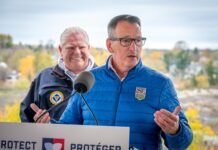
Greg Rickford, MPP for Kenora—Rainy River and Minister of Indigenous Affairs, said the CARE Unit is a direct response to calls from the region. “Today’s launch of the new Kenora CARE Unit is a direct response to what communities across Northwestern Ontario have been calling for: targeted, trauma-informed services for youth when and where they need them,” he said. “This investment will strengthen front-line services and ensure young people at risk of exploitation have access to the safe spaces and stability they deserve.”
Solicitor General Michael Kerzner added, “The Kenora CARE Unit will help ensure that those tasked with protecting children and youth have the tools needed to act swiftly to prevent sex trafficking and connect survivors to the supports they deserve.”
Community Partners Respond
Alicia Rogerson, Executive Director of Kenora-Rainy River Districts Child and Family Services, welcomed the news: “We are grateful Kenora was chosen as the third location for this very important initiative.”
Sean Spencer, Interim Associate Director of Anishinaabe Abinoojii Family Services, added: “We are providing a service that will allow at-risk youth to feel safe, protected, and supported not only in the present, but as they advance on a path to wellness.”
The launch also earned praise from Dean Wilson, Executive Director of Weechi-it-te-win Family Services: “We look forward to contributing more to combat this ever-growing issue of human trafficking and will actively help to build a strong safety network across Northwestern Ontario.”
Other community voices emphasized the culturally responsive and survivor-led approach of the expanded strategy:
-
Katherine Machimity (Tikinagan Child and Family Services): “Protecting at-risk children… requires collaboration… Parents, family, and community members all play an equal part.”
-
Sheri Norlen (William W. Creighton Youth Services): “This initiative ensures that youth receive trauma-responsive care, life skills, mental health and cultural supports.”
-
Jennifer Dreaver (Ogimaawabiitong): “Our role of providing wraparound services will help ensure youth are engaged where they are at, and in a culturally safe way.”
-
Jaye Wesley (Kenora Sexual Assault Centre): “The CARE Unit represents a critical and long-overdue step toward protecting children and youth from sexual exploitation.”
By the Numbers
-
Average age of recruitment into sex trafficking in Canada: 13 years old
-
Survivors and at-risk individuals supported under the AHTS since 2020: Over 29,000
-
Annual support by SafeHope Home programs: 70+ women and 24 children
-
Youth supported by Bridgenorth’s LifeEdge program: 47, plus outreach to many more
What’s Next for Northern Ontario?
The Kenora CARE Unit adds momentum to a broader strategy to regionalize anti-human trafficking efforts across the province. Local officials and service providers say it’s a much-needed step toward protecting youth from exploitation, particularly in remote and Indigenous communities that are often underserved.
The province plans to continue building on the CARE Unit model and investing in early intervention, survivor-led programming, trauma-informed housing, and community-driven prevention strategies.