The seeding stage plays a crucial role in shaping future yields — any inaccuracy at this stage directly affects both the quantity and quality of production. Using an RTK GNSS receiver ensures stable machine operation with centimetre-level accuracy across the entire field. In this article, we explore how RTK technology significantly improves seeding quality and helps reduce crop losses starting from the very first season of use.
Perfectly Straight and Parallel Seeding Lines
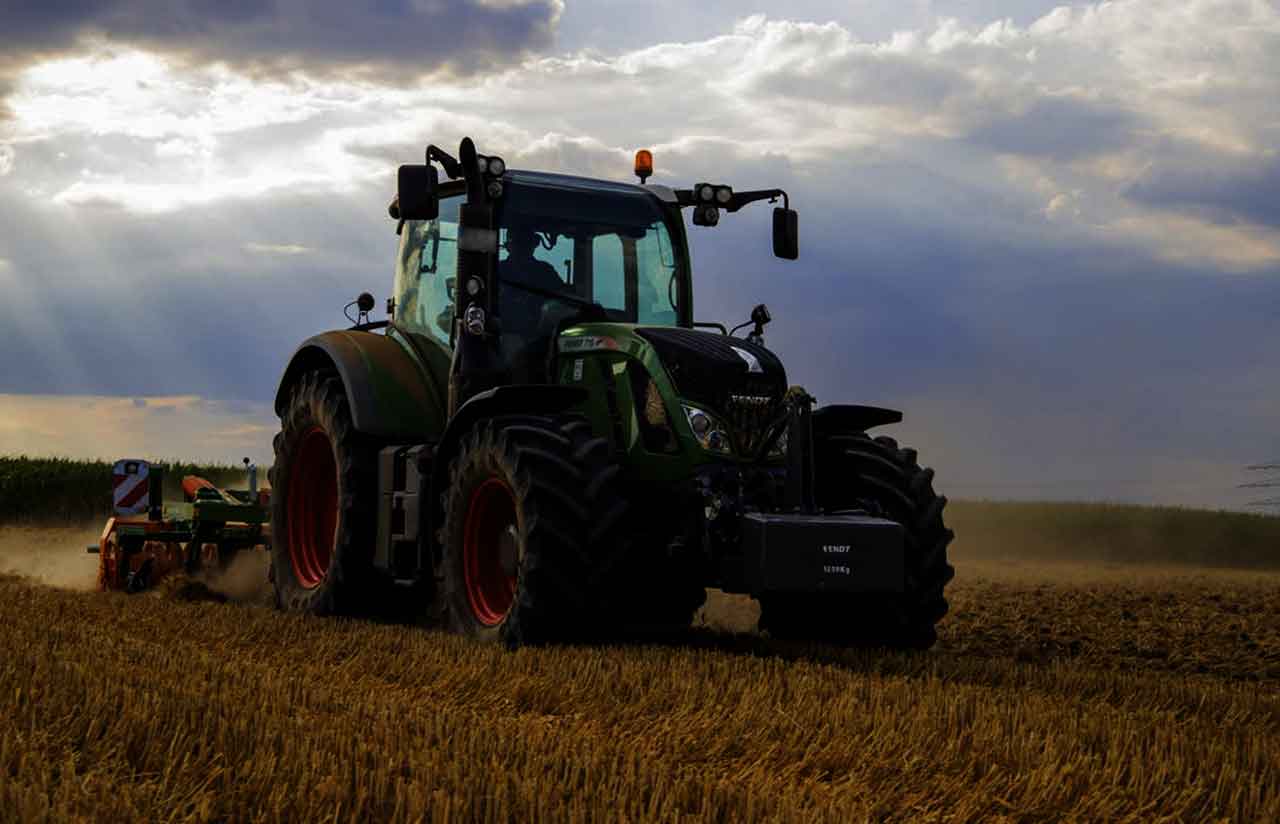
With an rtk gps receivers at Fieldbee, tractors and seeders move across the field with an accuracy down to just a few centimetres, creating perfectly straight and parallel lines from edge to edge. Even when returning to the same field after several days or seasons, the machinery continues to operate along the exact same tracks. This benefits not only the current seeding process but also all subsequent operations, including inter-row cultivation, fertilising, spraying and harvesting. Straight lines enable more efficient route planning, reduce the risk of crop damage and maximise field area utilisation.
Precise Row Spacing Compliance
Accurate row spacing is critical for healthy crop growth. RTK navigation ensures consistently maintained inter-row spacing, even on uneven terrain or during night-time work. This creates optimal conditions for photosynthesis, reduces overcrowding and disease risks, improves air circulation and light penetration for each plant. Precise spacing also simplifies mechanical inter-row cultivation, minimising plant damage and making fertiliser or crop protection applications more effective.
Uniform Germination and Even Crop Stands
When seeds are placed evenly and at consistent depth, each plant receives equal starting conditions for development. The result is a dense and uniform crop stand, with plants developing at similar heights and growth stages. This not only simplifies crop care throughout the growing season but also ensures even ripening at harvest. Uniform stands make combine harvesting easier and help minimise grain losses during collection.
Minimising Skips and Overlaps
Skips lead to yield losses on untreated areas, while overlaps result in excessive seed, fertiliser and chemical usage, as well as plant overcrowding. The RTK GNSS receiver fully controls the implement’s working width, preventing both skips and overlaps even on complex field sections or when switching operators. This allows for even resource distribution and maximises efficiency across every square metre of the field.
Consistent Seeding Depth
Seeding depth directly affects germination speed and quality. Stable machine movement along precise trajectories allows for consistent seed placement depth, regardless of terrain variations or changes in soil density. This is critical for achieving uniform and reliable germination, especially under changing weather conditions. Plants develop strong root systems, becoming more resilient to drought, wind and other stress factors, ultimately improving yield performance.
Reduced Operator Workload and Simplified Quality Control
Seeding requires high concentration and driving precision from operators over long hours. The RTK GNSS receiver handles precise positioning, allowing operators to focus on monitoring equipment performance, seeding parameters and overall operation quality. This reduces fatigue, minimises human error, and enables even less experienced operators to perform seeding tasks with professional-level accuracy.